
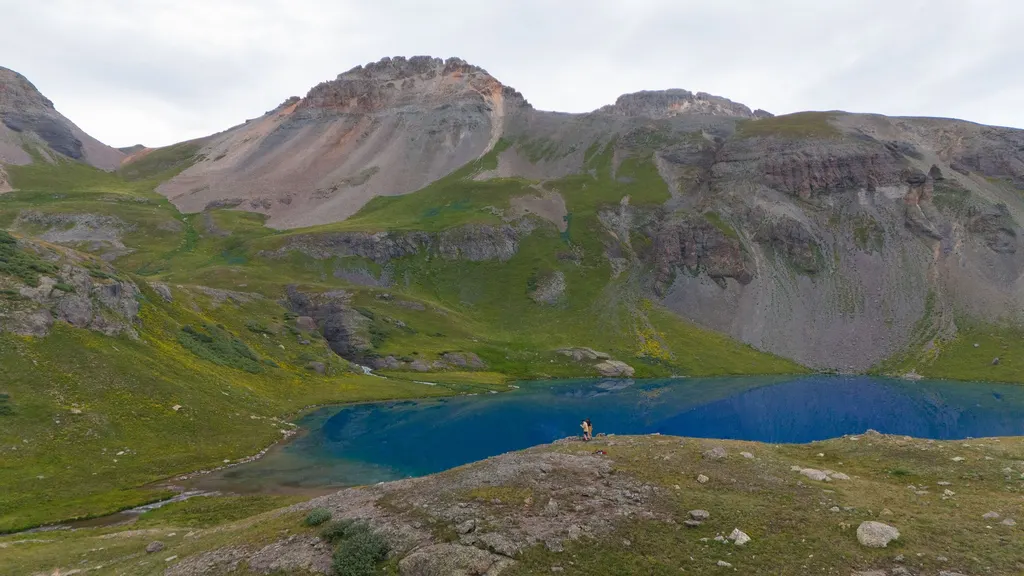
Silverton is where the pavement stops being the point. The town sits above 9,300 feet in the San Juan Mountains, and the county roads leaving it climb straight out of the valley toward passes above 12,000 feet, ghost towns nobody bothered to tear down, and basins that hold snow into July. That is why Jeep tours out of Silverton are an industry here rather than a novelty — the high country starts about four blocks from the Greene Street storefronts. This guide covers the routes, the difference between going guided and going alone, the local rules that catch visitors out, and how to stage a trip from town.
The Alpine Loop, in plain terms
The Alpine Loop Backcountry Byway is a 65-mile route linking Silverton, Lake City, and Ouray, and it draws more than 100,000 people a year. Two passes make it a loop rather than a dead end: Cinnamon Pass at 12,620 feet and Engineer Pass at 12,800 feet. Both are rated for high-clearance four-wheel drive.
From the Silverton side, the route runs northeast up the Animas past Howardsville and the old Eureka mill site to Animas Forks — a ghost town at 11,200 feet, roughly twelve miles up the county road, with standing structures and interpretive signage rather than a reconstruction. Animas Forks is the hinge. From there Cinnamon climbs south toward Lake City and Engineer climbs north toward Ouray, and which one you take determines the rest of your day.
That structure matters when you plan. In dry summer conditions a stock high-clearance SUV can often make Animas Forks and back as a half-day out of Silverton, no passes involved. The full loop is a long day and a genuinely different driving problem.
Other routes out of town
The Alpine Loop gets the attention, but Silverton sits at the middle of a whole network:
- Ophir Pass — a shelf road west off US-550 toward Ophir and the Telluride side. Narrow, exposed in stretches, and often the first pass people try.
- Stony Pass — climbs east out of Howardsville over 12,000 feet toward the Rio Grande headwaters. Remote; you feel it.
- County Road 110 to Gladstone — a short run up the Cement Creek drainage into old mining country north of town.
- California Gulch and Corkscrew Gulch — the basins between Silverton and Red Mountain, connecting toward Ironton and the Ouray side.
One thing worth saying plainly: the Million Dollar Highway over Red Mountain Pass at 11,018 feet, the paved stretch of US-550 between Silverton and Ouray, does not require a Jeep. It is a two-lane highway with dramatic exposure and no guardrail in places, and plenty of visitors mistake it for a four-wheel-drive route. Drive it in daylight, unhurried, and let locals pass.
Guided, rented, or your own rig
Three ways up, and they suit different people.
Guided. A driver who runs these roads daily knows which passes actually opened this week — information a map cannot give you — and handles the exposure while you look at the scenery. Guided tours also carry the history: which basin fed which mill, why a town this size ever needed this much infrastructure. Book ahead in July and August; the good operators fill.
Rented. Outfitters in Silverton and Ouray rent Jeeps and side-by-sides by the day. This gets you the route on your own schedule without hauling your own vehicle over the passes just to arrive. Read the rental agreement on where you are permitted to take the machine — some routes are excluded.
Your own vehicle. Cheapest, most flexible, and the option where the consequences are yours. Carry a full-size spare, know your clearance and your approach angles, and bring recovery gear you actually know how to use. A tire sliced on a shelf road above 12,000 feet with no cell service is the classic San Juan mistake, and it is nearly always a tire.
The rule that catches visitors: OHVs are not allowed in town
This one surprises people every summer. In October 2021, Silverton voters decided not to allow OHVs, ATVs, or dirt bikes without a street-legal license inside the town limits. Driving one into town risks a $300 fine and towing. Street-legal dirt bikes are the sole exception.
San Juan County is a different jurisdiction with a different answer: under a 2022 county resolution, OHVs are permitted on certain county roads — not all of them. So the practical pattern is to trailer or haul your machine to a legal county-road access point rather than riding it out of a motel parking lot and down Greene Street.
A few more requirements worth handling before you arrive: OHVs must be registered with Colorado Parks and Wildlife with the sticker visibly displayed, and operators must carry liability insurance. Registration can be done through CPW, and outlets in Silverton sell them as well. Rules and road designations do get revisited, so check the town and county maps for the current season rather than trusting a forum post.
None of this applies to a licensed, plated Jeep or truck. The ban is about unlicensed machines, not four-wheel drive.
The season is shorter than people expect
The high passes generally open somewhere between late May and early June and close in late October, but those are edges, not a plan. The dependable window is July through September. Snow holds on north-facing pitches above 12,000 feet deep into July, and a September storm can close a pass for the year with no warning.
Early-season trips run into a specific problem: the road is clear for miles and then a single cornice or drift sits across it at the top, and there is nowhere to turn around. Check conditions the morning you drive. The rental shops and guide outfits in town are the best source, because they were up there yesterday.
What actually goes wrong up there
Altitude. Silverton is above 9,300 feet before you start climbing, and Engineer Pass tops out at 12,800. If you drove up from sea level yesterday, give the first day to something easier and drink more water than feels necessary.
Afternoon storms. Thunderstorms build most days in July and August, and above treeline at two in the afternoon is a bad place to be. Start early. Plan to be off the high passes by early afternoon rather than pushing one more basin.
No cell service. Assume none the moment you leave town. Download offline maps before you go and tell someone your intended route and return time.
Road etiquette. Shelf sections are one lane. Uphill traffic has the right of way, and there is often no pullout for a quarter mile, which means somebody reverses. Know which somebody you are prepared to be.
Fuel and supplies. There is nothing on the loop. Fill the tank and buy the water in town.
Staging out of Silverton
The reason people base in Silverton rather than day-tripping from Durango is time. A guided tour with an early departure, a full day on the loop, and a late return does not fit around a 45-mile drive over Coal Bank and Molas passes at both ends. Staying in town buys you the early start and the unhurried finish.
Trailer parking is the practical constraint, and it is worth asking about when you book rather than discovering the answer at check-in with a 20-foot trailer behind you. Fuel, groceries, and a hot meal are all within a few blocks of the lodging, which matters more than it sounds when you get back down at seven in the evening covered in dust.
Where to stay in Silverton when you ride
Silverton Colorado lodging is a short list, and that is the honest framing: a handful of small, independently run motels in the walkable center of town. There is no chain-hotel overflow to absorb a busy weekend, which is why most visitors searching for places to stay in Silverton CO end up comparing motels rather than hotels. Three anchor the core:
- Triangle Motel — 848 Greene Street, Silverton, CO 81433, (970) 387-5780. Pet-friendly, with an ADA-accessible room, and sitting right next to Station 550 North for fuel and convenience items. It is the most practical base for an OHV or Jeep trip: you can top off the tank, grab supplies, and roll out early without moving the vehicle twice.
- Prospector Motel — 1015 Greene Street, Silverton, CO 81433, (970) 387-5466. Central and budget-friendly, a short walk from Silverton's shops and restaurants, which is what you want after a long day above treeline.
- Kendall Mountain Lodge — 1025 Blair Street, Silverton, CO 81433, (970) 844-6465. On historic Blair Street, with mountain-lodge character, named for the peak that rises directly above town.
Rooms are limited across all three, and summer weekends — the same July-through-September window when the passes are open — sell out first. Book as soon as your dates are firm. Our Silverton visitor guide covers the town itself in more depth, and the motel category in the directory lists lodging across the region.
Fitting it into a Durango trip
Plenty of people ride the Alpine Loop as part of a broader Durango stay, driving or riding the train up and back. If that is your plan, the where to stay in Durango guide covers the Durango end of the lodging question, the Durango outdoor adventure guide maps the rafting, biking, and hiking that fill the other days, and the things to do in Durango and Durango attractions guides handle the rest of the region.
If the high country is the actual reason you are coming, though, reverse the order: book the Silverton room first. It is the one that runs out.