
Most people arrive in Durango with a short list: the train, maybe Mesa Verde, walk around downtown. That list is a fine starting point — but it misses the layer that locals know, which is how all of it connects. The Animas River running through the middle of town, the trail networks beginning at the edge of the historic district, the galleries holding work rooted in the Southwest landscape — these are not separate items to check off. They're the same place seen from different angles. This guide maps all of it: what's genuinely worth a day, what's worth half a day, how to put the pieces together by season, and which outfitters and local businesses in the directory actually deliver the experiences.
The Durango & Silverton Narrow Gauge Railroad
The Narrow Gauge is the attraction that earned Durango its place on the map, and after more than 140 years of continuous operation it still earns its reputation. A coal-fired steam locomotive pulls vintage passenger coaches 45 miles north through the Animas River canyon to Silverton — a genuine piece of American railroad history, not a reproduction or a tourist contrivance. The canyon section, where the track clings to the canyon wall with the river below, is the part that sticks with people.
The full round trip to Silverton and back runs about nine hours. A shorter Cascade Canyon option takes roughly three hours and stays in the canyon rather than going all the way to town. Both are scenic; the Silverton run is the classic for a reason, but the Cascade option is more realistic if you're short on time or traveling with young children.
Buying tickets early is not optional in summer. July trains — especially morning departures — routinely sell out weeks ahead. Fall is the season locals tend to prefer: aspen gold lines the canyon walls, temperatures are comfortable, and the crowds thin considerably. Winter service runs on a limited schedule but the snowy canyon scenery is striking in its own right. Check the current timetable directly through the railroad before planning around it.
If you want to turn the train into a fuller adventure day, some of our tour operators package the railroad with a raft trip on the lower Animas — you ride the train north and float back, or reverse it depending on the operator. Colorado Outback Adventures and Durango Adventures and Zipline Tours are two outfitters in the directory to check for combination itineraries.
Mesa Verde National Park
About 35 to 40 miles west of Durango — roughly an hour's drive — Mesa Verde is one of the most significant archaeological preserves in North America. The cliff dwellings of the Ancestral Puebloan people, built roughly between 700 and 1,300 years ago, are extraordinary by any standard. Cliff Palace, the largest cliff dwelling in North America, and Balcony House are the signature sites; both require guided ranger-led tours, and tour tickets need to be reserved in advance during summer.
A full day at Mesa Verde is the right amount of time. The park road climbs to over 8,500 feet, and between driving time, the guided tours, Chapin Mesa Archeological Museum (free, at the park interior), and the overlook stops along the way, the hours fill quickly. Don't rush it.
If you'd rather not navigate alone, or you want narration that adds historical context to what you're seeing, several tour operators in Durango offer guided day trips to Mesa Verde with transportation included. Buck Horn Limousine Co handles transportation-focused trips; other operators build Mesa Verde into broader Four Corners itineraries.
The Animas River: What Runs Through Town
The Animas River running through the center of Durango is the geographic fact that explains almost everything about the town's outdoor character. The Animas River Trail runs along both banks through town, connecting parks and neighborhoods — it's a Durango-morning staple for runners, cyclists, and walkers before the tourist day begins. Free, accessible, and good from any point along it.
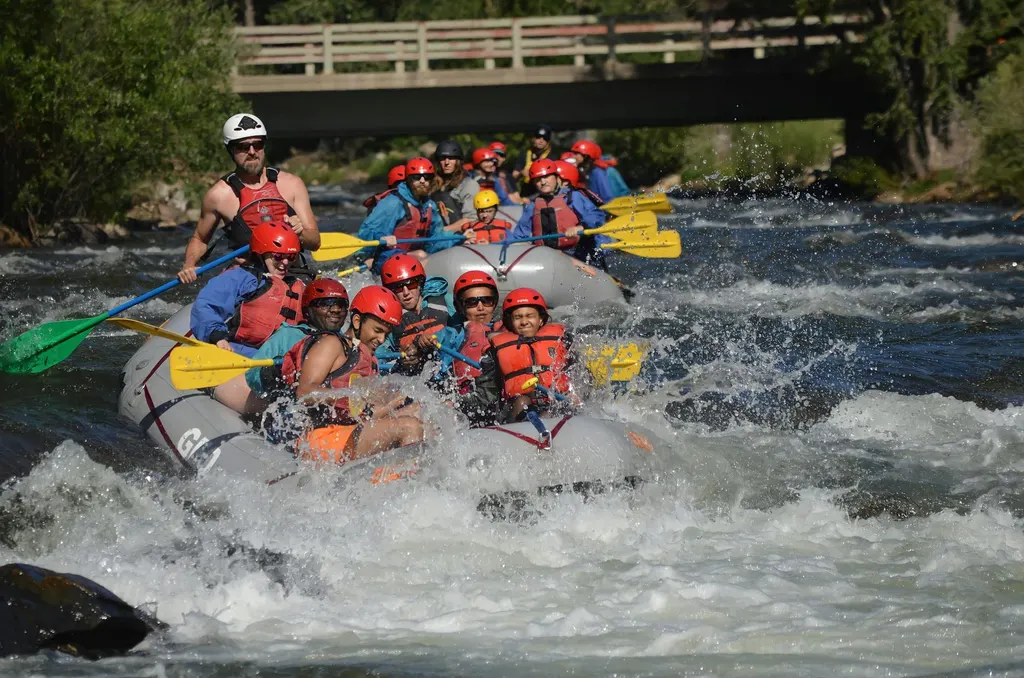
The more active version involves the whitewater above town. The upper Animas is a legitimate whitewater run with class III and IV rapids, and the stretch accessible by raft puts visitors inside the San Juan landscape rather than looking at it from a road. Getting on the river is straightforward — there are multiple licensed outfitters near the put-in on South Camino Del Rio, and the quality across them is consistently high.
From our raft trip outfitter listings:
- Durango Rivertrippers & Adventure Tours runs rafting and combination adventures with a reputation for well-guided trips for all experience levels.
- Mild to Wild Rafting & Jeep Tours is one of the most established operations in the area, covering both rafting and jeep tours if you want to combine water and overland in one day.
- Mountain Waters Rafting has been on the river for years and offers trips across the range of difficulty.
- Southwest Raft and Jeep and 4 Corners Whitewater & Jeep Tours both run water and overland combinations.
- Durango Rafting Company, Outlaw Rivers & Jeep Tours, and Flexible Flyers Raft & Jeep round out the local outfitter field.
River season follows snowmelt. Late May through early August is typically the active window, with flows peaking in June depending on snowpack. By late August the river drops; check current conditions with any outfitter before booking if you're visiting at the edges of the season.
For those more interested in fishing than whitewater, the Animas is a designated Gold Medal fishery above Durango — fly fishing is serious here, and local outfitters in the sports and outdoor recreation listings can connect you with guide services.
Downtown Durango: A Victorian Main Street That Actually Survived
Durango's historic downtown is a genuinely intact Victorian-era commercial district. Most of Main Avenue between 5th and 13th Streets dates to the 1880s and 1890s — the brick storefronts, the corniced facades, the general scale of the street — and the area has remained in active commercial use rather than becoming a museum piece. Walking it is its own attraction before you set foot inside anything.
A few anchors worth knowing:
The Strater Hotel at 699 Main Ave, built in 1887, is the architectural centerpiece — a red-brick Victorian landmark still operating as a hotel, with the Diamond Belle Saloon inside running live ragtime most evenings. The Narrow Gauge depot at the south end of Main is the working station and a handsome building in its own right. The historic commercial corridor between 5th and 13th holds most of the town's independent retail, restaurants, and galleries.
The arts and entertainment scene here is genuinely rooted in the Southwest landscape rather than generic mountain-town gift shops. The gallery concentration along Main Avenue reflects the region's tradition in Native American arts, contemporary Southwest painting, and photography.
From our art gallery listings:
- Toh-Atin Gallery at 145 W 9th St is one of the most established galleries in the region, specializing in Native American arts — textiles, jewelry, paintings, and pottery, with depth that rewards time.
- Earthen Vessel Gallery at 934 Main Ave carries pottery, ceramics, and sculpture with a strong sense of craft.
- Create Art and Tea at 1015 Main Ave combines a gallery space with a working studio — a different kind of engagement with the local arts community.
- Studio & Gallery at 1027 Main Ave and Blue Rain Gallery at 934 Main Ave B are both worth a walk-through on a Main Avenue afternoon.
- BluesMtnSoul at 915 Main Ave brings a more music-influenced aesthetic into the mix.
- Azul Gallery at 781 Main Ave rounds out a Main Avenue gallery walk that takes less than an afternoon to cover at a real pace.
For those who want a different lens on the city's history and atmosphere, Ghost Walk Durango offers evening walking tours through the historic district — the Victorian architecture and the town's mining-era past give this kind of tour more material to work with than most.
Mountain Biking, Jeep Tours, and the Terrain Beyond Town
Durango is a mountain biking town in a way that goes beyond typical resort-adjacent trail systems. The Horse Gulch trail network sits at the edge of the historic district — you can reach it from downtown without a car — and it's genuinely good riding across a range of skill levels. Twin Buttes, Ridgeline, and the surrounding national forest trails extend the options considerably.
If you're coming specifically to ride and want good local knowledge on conditions and rentals, the bicycle shop listings are the right starting point:
- Pedal The Peaks at 598 Main Ave B rents bikes and knows the local trail network well.
- 2nd Ave Sports at 640 E 2nd Ave handles rentals and gear across a broad range.
- Durango Cyclery at 143 E 13th St and Velorution Cycles at 877 E 3rd St are both shops with local roots and strong service reputations.
- Diaz Suspension Design at 143 E 13th St is the specialist for suspension work if you're riding your own bike.
- Durango Bike Project at 225 E 8th Ave rounds out the options.
For guided riding, Durango Mountain Bike Tours and Durango Biking Adventures — the latter based at Horse Gulch Road — both offer guided trail experiences for visitors who want local knowledge rather than a map.
The jeep tour contingent overlaps with the rafting outfitters. The San Juan Mountains above Durango include some of the most dramatic mountain road terrain in Colorado — routes to old mining districts, alpine passes, and views that simply don't exist from paved roads. Mild to Wild Rafting & Jeep Tours, Southwest Raft and Jeep, Outlaw Rivers & Jeep Tours, and Flexible Flyers Raft & Jeep all run overland tours into the surrounding terrain.
For aerial perspective, Soaring Tree Top Adventures and Durango Adventures and Zipline Tours offer zipline and canopy tours if you want elevation without a vehicle.
Purgatory Resort and the San Juan Skyway
About 25 miles north of Durango on US-550, Purgatory Resort is the area's ski and snowboard destination. In winter it serves as the primary reason people drive up the Million Dollar Highway. In summer, the resort pivots to lift-served mountain biking, a mountain coaster, and hiking, though it draws a different crowd than the trail networks close to town.
The San Juan Skyway — the loop of highways connecting Durango, Silverton, Ouray, Telluride, Ridgway, Cortez, and back — is one of the designated All-American Roads in Colorado and genuinely earns the designation. The stretch of US-550 between Durango and Ouray (the Million Dollar Highway section) follows canyon walls, passes old mining infrastructure, and crosses several mountain passes. It's a full-day drive if you do it properly; as a day trip from Durango to Silverton and back it's about two hours each way without stops, which is not how you want to do it.
Skip Purgatory in summer if resort amenities aren't your interest — the lift-accessed terrain is fine, but the trail networks accessible from town are better for most riders and hikers. In winter it's a different calculation entirely.
Building a Trip by Season
The season shapes everything here — not just which activities are available, but how the town itself feels.
Summer (June through August) is when every attraction runs at full capacity: the Narrow Gauge operates its complete schedule, the river is high enough for rafting, every trail is accessible, and the full restaurant and arts calendar is open. It's also the most crowded and the most expensive window. The train books out; river trips fill; downtown is busy from morning onward. Booking ahead matters in this window more than any other.
Fall (September through mid-October) is, in many locals' view, the best season to visit. Aspen gold takes over the mountain slopes around mid-September — visible from town, vivid from the train, spectacular from the jeep routes into the San Juans. Crowds thin, the river is lower (end of rafting season for most outfitters), and the pace of the town settles. A good window for biking, hiking, the train, Mesa Verde, and gallery browsing without competition for tables or trail space. See the Durango in Summer guide for the transition.
Winter (November through March) reorients the town around Purgatory skiing, Nordic skiing in the mountains, and the slower pleasures of a small mountain city in the off-season. Snowdown festival in late January fills downtown for a week. The Narrow Gauge runs limited winter excursions. Trail running and mountain biking on lower-elevation dirt continue into November most years. Fewer options than summer, but also fewer people and lower prices.
Spring (April through May) is shoulder season: snowmelt feeds the river, the passes reopen gradually, and the town is quiet. Some visitor services are in transition between winter and summer staffing. Good for fishing; less good for high-country hiking until late May. The price-to-experience ratio is arguably best in this window for travelers with flexibility.
How to Sequence Two Days
A two-day Durango visit forces a real choice. The Narrow Gauge and Mesa Verde are each a full-day commitment — you can't do both justice in one day. Pick one for Day 1. Reserve Day 2 for the Animas River (a half-day raft trip), the Horse Gulch trail network (two to three hours on a rented bike), the downtown gallery walk, and a longer dinner at one of the Main Avenue restaurants.
Three or more days opens the San Juan Skyway loop, additional biking in the national forest, Purgatory (in season), and the slower pace that lets you understand the town rather than just hit its highlights. The things to do guide and the outdoor adventure guide extend the planning once you have the marquee attractions sorted.
For where to stay while you're here, the where to stay guide covers hotels, motels, and lodging options from downtown to north Main.
Browse the full sports and outdoor recreation listings to find the specific outfitters, guides, and rental shops running operations during your visit — hours and availability shift between seasons, and a quick check through the directory saves a wasted stop.