
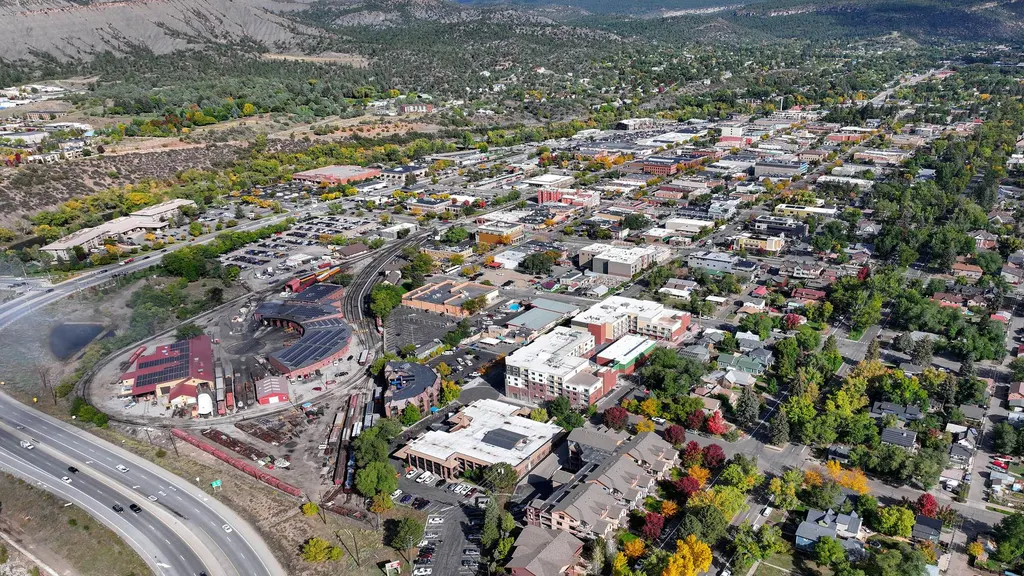
Durango costs more to live in than Colorado as a whole, and pays less. The median household here earns $78,602 against $95,470 statewide, while the median home is worth $668,400 against $539,400, per Census figures. Housing is the gap. In town, half of single-family homes sold this year for $937,500 or more.
This guide pulls the real numbers together: housing, rent, utilities, childcare, wages and taxes. Each figure carries a source and a date, so you can judge how old it is.
How does Durango compare with the rest of Colorado?
Here is the quick comparison, using the 2020-2024 American Community Survey five-year estimates from the U.S. Census Bureau:
| Measure | Durango | Colorado |
|---|---|---|
| Median household income | $78,602 | $95,470 |
| Median home value | $668,400 | $539,400 |
| Homeowners among households | 53% | 66.2% |
Put those next to each other and the problem is plain. A typical Durango home costs about 8.5 times a typical household's income. The pay is lower and the houses cost more. Fewer households own here than statewide, too. Median gross rent in Durango is $1,636 a month by the same Census count.
How much does a house cost in Durango?
More than the Census median, which covers every owner-occupied home, new purchases and old ones alike. Today's sales prices run higher. The Durango Area Association of REALTORS publishes a monthly Local Market Update built from Colorado Association of REALTORS data. Its September 2026 numbers for Durango in town:
| Type | September median | Year to date median | Change from last year to date |
|---|---|---|---|
| Single-family | $955,750 | $937,500 | up 13.2% |
| Townhouse or condo | $588,000 | $617,000 | up 19.9% |
Two more details matter if you are buying. Single-family homes took 82 days on the market until sale, year to date, and condos had 7.1 months of supply in September, which gives buyers more room to negotiate. One month of data in a small market can swing hard, so trust the year-to-date column.
For help on the buying side, see our guide to Durango real estate agents and the neighborhoods guide. You can also browse the real estate agent category.
What does rent cost?
The Census puts median gross rent at $1,636. But that figure blends older leases with new ones. New listings cost more. As of October 2026, Trulia shows average asking rents of:
| Size | Average asking rent |
|---|---|
| 1 bedroom | $1,600 |
| 2 bedrooms | $2,248 |
| 3 bedrooms | $2,800 |
| 4 bedrooms | $3,500 |
Other sites land in the same neighborhood. Apartments.com puts the overall average at $1,690 a month. Rental listing averages are rough, and they vary by site. Treat them as a range.
Renting? Start with the property management category for local managers, and read each lease closely.
What do utilities cost?
Less than rent, but they add up. Here are the published rates as of October 2026:
- Electric. La Plata Electric Association charges a $25.30 monthly base charge, $0.1156 per kilowatt-hour and a $5.73-per-kilowatt peak power charge, per its rate page. LPEA says it held rates flat in 2026.
- Trash and recycling. The City of Durango charges $12.56 a month for trash in a 60-gallon container and $7.95 for recycling, per its collection page.
- Internet. Two local wireless providers list plans from about $50 a month: Nimbus Solutions and AlignTec.
Here's a worked example, which is ours and not LPEA's. A home that uses 700 kilowatt-hours in a month pays $25.30 plus about $80.92 in energy charges, or roughly $106, before the peak power charge. Heating fuel is extra if you use propane. Our utilities guide explains who provides what.
What does childcare cost?
A lot. The county's January 2025 childcare plan puts tuition at $12,480 to $21,294 per child per year, and says families here spend up to 29% of their income on care. MIT's living wage model estimates $14,143 a year for one child. And slots are scarce. Read our childcare guide before you budget.
What does it take to live here comfortably?
MIT's Living Wage Calculator estimates La Plata County costs, updated February 2026. It is a county-wide model, not a Durango-only number. For a single person with no children, it estimates:
| Category | Yearly cost |
|---|---|
| Housing | $14,245 |
| Transportation | $9,865 |
| Food | $5,106 |
| Medical | $3,997 |
| Required income before taxes | $52,947 |
That works out to a living wage of $25.46 an hour. Add a child and the number jumps to $45.55 an hour for one working parent. If two people work and have two kids, each needs about $31.71 an hour. Compare that with the state minimum wage of $15.16, which MIT lists for 2026.
Wages vary by field. MIT lists typical salaries of $108,130 for healthcare practitioners, $66,890 for education and library jobs, $63,210 for construction and $42,130 for food preparation and serving. Set the last of those next to the housing numbers and the squeeze is obvious. The county's childcare plan even notes that many early educators commute from New Mexico or other rural areas because of local living costs.
What about taxes?
Sales tax is high. Avalara lists a combined 2026 rate of 9.4% for Durango, with the state at 2.9% and the city at 3.5%. That rate applies to many purchases, so check what is taxed before you make a big buy. For Colorado income tax, property tax and any tax planning, ask an accountant or check state and county sources. This guide is not tax advice.
What would a single renter's month look like?
Here is the sum for one person renting a one-bedroom. It mixes sources and it is our own arithmetic, so treat it as a sketch, not a quote. A roommate would change it a lot.
| Line | Monthly cost | Source |
|---|---|---|
| One-bedroom rent | $1,600 | Trulia asking average, October 2026 |
| Electric, 700 kWh | about $106 | LPEA 2026 rates, our example |
| Internet | about $50 | Local wireless plan listings |
| Food | about $426 | MIT estimate of $5,106 a year |
| Transportation | about $822 | MIT estimate of $9,865 a year |
| Medical | about $333 | MIT estimate of $3,997 a year |
| Total | about $3,337 | Before taxes and everything else |
That total is roughly $40,000 a year, and it leaves out taxes, phone, clothing and fun. It also uses today's asking rent, which is higher than the housing cost MIT builds into its own model. Sperling's BestPlaces, a cost-of-living index with its own method, scores Durango at 117.9, which is 17.9% above the U.S. average and 2.2% above Colorado's average. Indexes disagree on the details. They agree on the direction.
How can I stretch the budget?
Small moves add up:
1. Shift your power use. Ask LPEA about its time-of-use rate. On-peak hours are 6 to 9 a.m. and 5 to 10 p.m., Monday through Saturday, and the off-peak rate is $0.0690 a kilowatt-hour. 2. Use the free stuff. The trails are free, and our parks and trails guide shows where. The city rec center sells passes with half-price second-person options, covered in the fitness guide. 3. Shop insurance and banking locally. Compare providers in the insurance agency and bank categories. 4. Time the market. Condos had 7.1 months of supply in September, so buyers have more bargaining room there.
One last caution. Every number here carries a date, and housing moves fast. Re-check the REALTORS' monthly report and current rental listings before you make an offer or sign a lease, and treat anything older than a few months as a starting point only.
Moving soon? Our moving to Durango guide lays out the first few months, and the home services guide covers the trades you will call.