
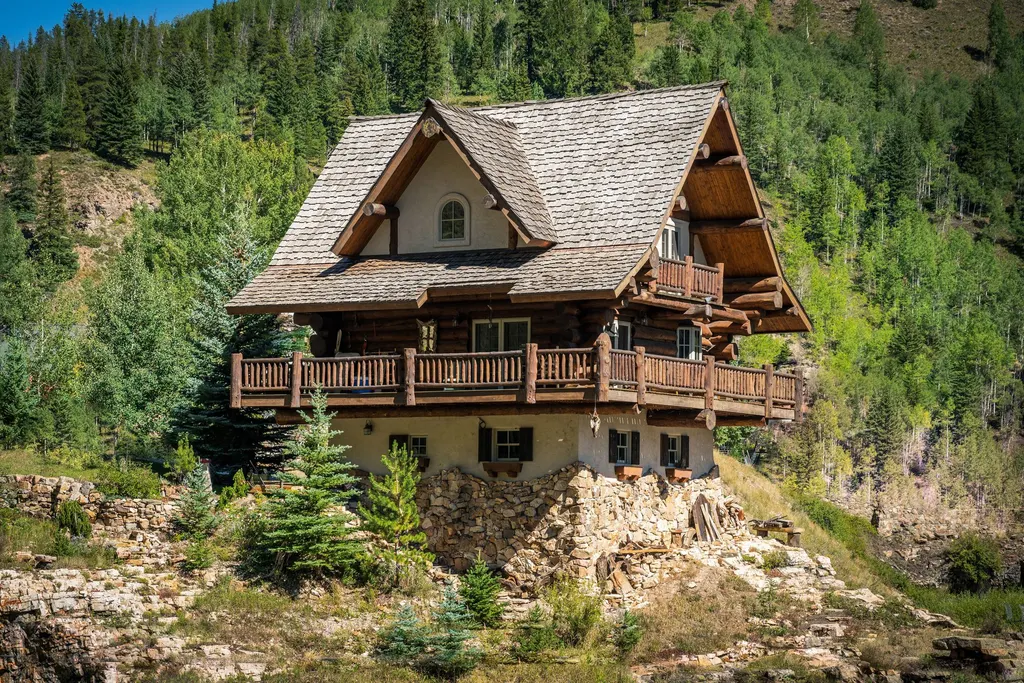
If you've spent any time trying to buy or sell property in Durango, you already know the market doesn't behave like what you read in national real estate coverage. It's small, relationship-driven, and shaped by geography in ways that make the specific experience of your agent matter far more than their brokerage's logo on a yard sign. This guide is an attempt to map that reality — the different segments of the Durango market, how buyer and seller representation actually works here, what to look for in an agent, and where to start your search across the real-estate-agent, real-estate-agency, and custom-home-builder listings in the directory.
The Durango market in brief
Durango sits in a basin at roughly 6,500 feet, surrounded by the San Juan National Forest on multiple sides, and hemmed in by terrain that has always limited the supply of buildable land within city limits. That structural scarcity, combined with sustained in-migration from Front Range metros and remote-work relocations, has kept demand well ahead of inventory for most of the past decade. The result is a market where properties in the middle of the price range move quickly when priced correctly, off-market deals happen with some regularity, and an agent's local relationships can matter as much as their technical skills.
None of that means prices only go one direction — rates, economic cycles, and seasonal rhythms all affect Durango — but the inventory constraint is a persistent feature of the market rather than a temporary condition. An agent who hasn't been working here consistently may not appreciate how that changes negotiation dynamics.
For anyone relocating from out of state, the moving to Durango guide and the Durango neighborhoods guide are worth reading before you start agent interviews. Knowing roughly which part of town you're targeting and why will make those conversations substantially more useful.
By area and property type
Durango real estate doesn't break into one homogeneous market. The experience of buying a 1910 Victorian in the historic district is essentially unrelated to buying acreage on the Animas south of town, and an agent who is strong in one segment may have limited transaction history in another. Here's how the main segments differ:
Downtown and the historic district. The blocks running east of Main Avenue from about 6th Street to 12th Street, plus the original residential neighborhoods around them, are the most coveted in-town addresses. Older homes on small lots, limited parking, deed restrictions on renovation in some cases, and competition that can be sharp for anything in good condition. Agents who know the historic stock — what's been updated, what hasn't, what a title search on a turn-of-the-century property sometimes surfaces — carry real value here.
Three Springs and east Durango. The planned development near Mercy Hospital has grown into a full neighborhood over the past fifteen years, with newer construction, more predictable infrastructure, and easier access to the highway corridor. First-time buyers and families relocating for healthcare employment are disproportionately active here. The trade-off is distance from downtown walkability and a suburban character that differs sharply from the historic core.
Rural acreage and the valley floor. The Animas and Florida river valleys outside the city limits hold a significant portion of the county's most desirable properties — horse properties, small ranches, ag-exempt parcels, and homes on several acres that are simply unavailable inside city limits. These transactions are categorically different from in-town purchases: well and septic inspections, water rights documentation, fire mitigation requirements in designated wildfire zones, access easements, and sometimes agricultural lease complications. The due diligence checklist is longer and the margin for a missed detail is higher. Work with an agent who can demonstrate specific rural transaction experience in La Plata County.
The Durango Mountain Resort / Purgatory corridor. The properties up Highway 550 toward Purgatory — ski-in/ski-out condos, mountain cabins, and the development clusters around the resort base — attract a different buyer pool: second-home purchasers, ski-country investors, and some short-term rental operators. Short-term rental regulations have shifted in recent years, so if rental income is part of the calculation, confirm current county rules with your agent before making that a financial assumption.
Upper Florida Road and rural La Plata County. Beyond the immediate Durango basin, the broader county has agricultural land, mining claims, timber parcels, and properties that require a working knowledge of Colorado water law to evaluate properly. Southwest Water and Property Law handles some of the legal complexity these transactions generate; a good rural agent will often work alongside water law counsel on complex acquisitions.
Buyer's agents vs. listing agents
In Colorado, agents are required to disclose who they represent, but the implications of that disclosure aren't always explained to buyers as clearly as they should be.
A listing agent is hired by the seller. Their job is to market the property, attract offers, and negotiate to maximize the seller's outcome. They are good at that job, and many of them are also ethical and helpful — but they are not working for you.
A buyer's agent represents the purchaser and has a fiduciary obligation to put the buyer's interests first: disclosing what they know about the property, advising on offer strategy in the buyer's favor, negotiating repair requests, and flagging issues in inspection reports that you should take seriously. In a competitive market, that advocacy matters. The buyer's agent's commission is typically factored into the transaction economics, though how that's structured can vary — ask upfront.
Dual agency — where the same agent or the same brokerage represents both buyer and seller — is legal in Colorado but reduces the agent's ability to fully advocate for either party. It's worth understanding before you agree to it.
The agents and agencies active in Durango
The directory lists the full landscape of real estate agents and real estate agencies active in the market. A few of the more prominent names:
The Hamilton Brother's Team Empowered By The Blackmore Group Durango CO operates out of 2901 Main Ave and is one of the more visible team-based operations in town. Ashley Blackmore l Blackmore Group Colorado & New Mexico and Michelle Brown Homes Blackmore Group are among the associated agents under that umbrella.
The Wells Group is one of the oldest independent brokerages in Durango and has a deep bench of agents. Lauren Ammerman The Wells Group Real Estate Brokerage, Jerome Bleger The Wells Group of Durango, and The Durango Team at The Wells Group all operate under that brand.
Coldwell Banker Mountain Properties Durango at 785 Main Ave is the local franchise of the national brand and has a large roster of agents. Jarrod Nixon: Coldwell Banker Mountain Properties, Ashley Truitt - Coldwell Banker Mountain Properties, Gayle Webster the Durango Home Advisor, April Bates Broker Associate Coldwell Banker Mountain Properties, Robby Overfield, and Kathy Hall & Rebecca Applegate are among the agents listed there.
Keller Williams Realty Southwest Associates at 700 Main Ave has multiple active agents including Matt Ferguson, Joe Clair, Aliya Zalalutdinova, Karen Overington, and Forester Tesche.
For buyers looking at rural property, Rebecca Balboni at Coldwell Banker Mountain Properties and Durango Horse Properties has specific experience with equestrian and agricultural property.
On the boutique side, Alpenglow Properties at 110 W 9th St, Destination DRO Real Estate Group and Malia Bowkett, and Blue Sky Homes and Land represent the independent end of the market. Kniffin Team Legacy Properties West Sotheby's brings the Sotheby's network to the higher-end segment.
EXIT Realty Home & Ranch and Lisa Govreau - Remax Pinnacle are among other established agents in town. Chessie Hollibaugh eXp Realty Durango, Kyle Kunkel | eXp Realty Durango, and Jeremiah Aukerman - EXP Realty Durango represent the eXp cloud-brokerage model locally.
Rachel Sadler - Move Me to Southwest Colorado and John Mace Your Durango Real Estate with R1 Colorado are among agents with an explicit focus on relocation buyers, which is a meaningful portion of the market.
Local agencies vs. independents vs. national franchises
The practical differences between working with a long-established Durango independent like Wells Group, a national franchise office like Coldwell Banker or Keller Williams, or a newer model like eXp come down to a few things:
Local independents tend to have the deepest community ties and sometimes the strongest knowledge of off-market inventory — properties that change hands through referral before they hit MLS. They may have relationships with sellers that help in a multiple-offer situation.
National franchise offices provide their agents with consistent training platforms, transaction coordination systems, and in some cases relocation pipelines that matter if you're coming from out of state with a corporate move. The Durango offices of these brands are locally staffed and locally managed — the franchise affiliation is more about back-end systems than about the quality of the local agent.
Cloud brokerages like eXp have lower overhead (no physical office in every market) and often attract agents who are comfortable with digital-first transaction management. For buyers or sellers, the practical experience depends almost entirely on the individual agent rather than the platform.
The honest answer is that the brokerage affiliation matters less than the individual agent's local transaction history, market knowledge in your specific area, and the quality of their communication. Interview at least two or three before committing.
Selling in Durango: what's different here
If you're listing, the Durango market's tight inventory has historically favored sellers — but that doesn't mean preparation doesn't matter. A few things that affect outcomes here specifically:
Pricing is still a discipline. Overpriced listings in this market sit. The pool of buyers is small relative to national markets, and the locals paying attention to inventory know within a week when something is overpriced. A listing agent who knows recent comparable sales in your specific sub-market (not just the broader city) is doing you a real service by pushing back on an inflated ask.
The seasonal calendar matters. The Durango listing market has distinct seasons. Activity picks up in spring and peaks through summer; fall can still be productive; winter listings typically see less traffic except for properties that appeal to ski buyers. Timing your list date to align with peak buyer activity is worth discussing with your agent.
Condition disclosures are serious. Colorado has robust seller disclosure requirements, and Durango's older housing stock sometimes surfaces issues — foundation concerns in properties near the river, older electrical in historic homes, radon (present throughout the Colorado mountain region), and sometimes previous flood history near the Animas. A listing agent who helps you get ahead of disclosures rather than hoping nothing surfaces in inspection is the right one.
Building custom in Durango
For buyers who can't find what they want in the existing inventory, custom construction is an option — but land availability within city limits is constrained, so most custom builds happen on rural lots or in subdivisions outside town.
Asher Custom Homes, Mantell-Hecathorn Builders, Elevation Custom Builders, and Krueger Group are among the established custom builders listed in the directory. Agave Durango and Classique Builders round out the local options. Rocky Mountain Tiny Houses serves buyers looking for small-footprint construction on rural lots.
Custom building here comes with the mountain west's standard complications: site costs that reflect terrain and access, wildfire mitigation requirements that affect materials and landscaping, well and septic if the lot is outside city water/sewer, and sometimes significant wait times for subcontractors. Work with a builder who has pulled permits in La Plata County before and knows what the inspectors here expect. The Durango home maintenance seasonal guide and Durango home services guide are useful companions once you've broken ground.
How to choose your agent
A few practical questions worth asking before you commit:
- How many transactions have you closed in the past twelve months in this area and price range? Durango is small enough that an agent with strong countywide numbers but no transactions in your specific sub-market may be learning on your deal.
- Do you have experience with rural property specifically? If you're buying outside the city limits, the due diligence process is meaningfully different. Ask for examples.
- What's your approach to multiple offers? In a competitive segment, an agent who has gotten buyers into contract in multiple-offer situations has different tactical experience than one who hasn't.
- How will you communicate during the transaction? Some buyers want daily updates; others want to hear only when something actionable is happening. Match your communication style to your agent's default.
- Who represents the seller in this transaction? In a dual-agency situation, know what you're agreeing to.
For the full landscape, browse all real estate agents and real estate agencies active in Durango. If you're early in the process and still evaluating the area itself, the moving to Durango guide and Durango neighborhoods guide give context that will sharpen your conversations with any agent you talk to.